Health and Safety Policy for Landscaping Earls Court
 This Health and Safety Policy sets out the principles and standards used to manage risk in landscaping Earls Court activities. The aim is to protect workers, clients, visitors, and the wider public while delivering reliable outdoor services. We are committed to maintaining a safe working environment through planning, supervision, training, and continuous review. Every task, from site preparation to final clean-up, is approached with risk awareness and careful control measures.
Our policy applies to all employees, subcontractors, and anyone carrying out work on our behalf. It covers routine garden maintenance, hard landscaping, planting, surface preparation, waste handling, and the use of tools and machinery. The company expects everyone involved in landscaping services to act responsibly, report hazards promptly, and follow safe working practices at all times. Safety is treated as a core part of service quality, not as an optional extra.
 The management team holds overall responsibility for this policy and for ensuring that resources are available to implement it effectively. Supervisors must assess work areas before tasks begin, confirm that equipment is suitable, and make sure controls are understood by the team. All staff are required to cooperate with instructions, use equipment correctly, and immediately raise concerns about unsafe conditions. Where necessary, work will be paused until hazards have been addressed.
We identify hazards before and during work, especially those involving moving machinery, manual handling, slips, trips, falls, sharp tools, noise, dust, and weather exposure. In garden maintenance and outdoor construction work, conditions can change quickly, so checks are repeated throughout the day. Safe systems of work are adjusted for the task, the terrain, and the people involved. Particular attention is paid to vulnerable areas such as uneven ground, hidden obstacles, and access routes.
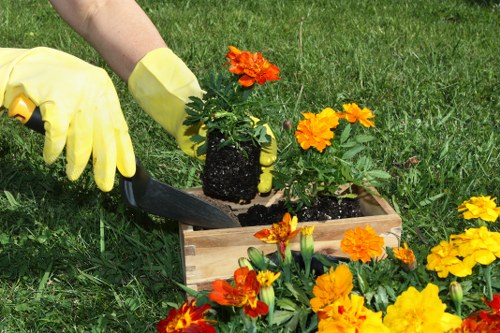
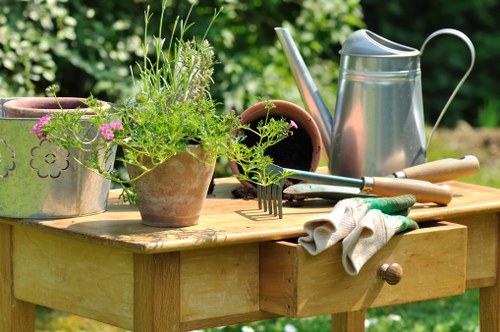
Personal protective equipment must be worn where required and kept in good condition. This may include gloves, safety boots, eye protection, hearing protection, and high-visibility clothing. Workers must also use the correct tools for each job and ensure guards, handles, and controls are intact. Equipment inspection is essential before use, and defective items must be removed from service immediately. Good housekeeping is also expected so that waste, offcuts, and materials do not create avoidable hazards.
 Training is provided so that workers understand safe methods, emergency actions, and the limitations of each piece of equipment. New employees receive induction on site rules, safe manual handling, and hazard reporting. Additional instruction is given when tasks involve powered tools, lifting, or working near the public. Our approach to landscaping safety includes clear communication, task briefing, and supervision proportionate to experience and risk.
Manual handling is managed through planning, team lifting, and the use of mechanical aids where possible. Materials such as soil, paving, timber, and plants must be handled with care to avoid strain or impact injuries. When lifting cannot be avoided, loads should be assessed for weight, size, and stability before movement begins. Repetitive tasks should be varied where possible to reduce fatigue. Workers are encouraged to stop and ask for help if a load is awkward or unsafe.
Weather conditions can create significant risks in outdoor work. Heat, cold, rain, wind, and low light all affect safety, and work methods must reflect current conditions. In very wet or icy conditions, surfaces may be too hazardous for certain tasks. In hot weather, rest, hydration, and shaded breaks are important. The policy requires teams to remain alert to changing conditions and to adapt scheduling when necessary to reduce exposure.
Emergency readiness is an important part of this policy. First aid provisions must be available, and workers should know the procedure for reporting injuries, incidents, near misses, and dangerous occurrences. Emergency routes, assembly points, and local hazards should be confirmed before work starts. Serious incidents will be investigated to identify root causes and prevent recurrence. Lessons learned will be used to improve procedures across all landscaping operations.
 The company expects a strong culture of shared responsibility. Managers lead by example, and all personnel are encouraged to support safe behaviour, challenge unsafe actions, and protect others from harm. Risk assessments and method statements are reviewed when conditions change, tasks differ, or new equipment is introduced. This flexible approach supports consistent standards across varied projects in landscaping Earls Court without relying on fixed assumptions.
Environmental care is linked to safety because clean, well-managed sites are safer sites. Waste should be separated, stored, and removed in a controlled manner. Fuel, oils, chemicals, and other substances must be used and stored according to safety instructions, with spills contained promptly. Tools and vehicles should be secured when not in use, and work areas left tidy at the end of each shift. These habits reduce the chance of injury and improve overall site control.
 This policy will be reviewed regularly to ensure it remains effective, practical, and suited to the work being carried out. Updates may be made following incidents, changes in equipment, revised procedures, or new safety concerns. The objective is continuous improvement through clear expectations, good supervision, and consistent attention to risk. By following this policy, everyone involved in landscaping services contributes to a safer, more professional working environment.